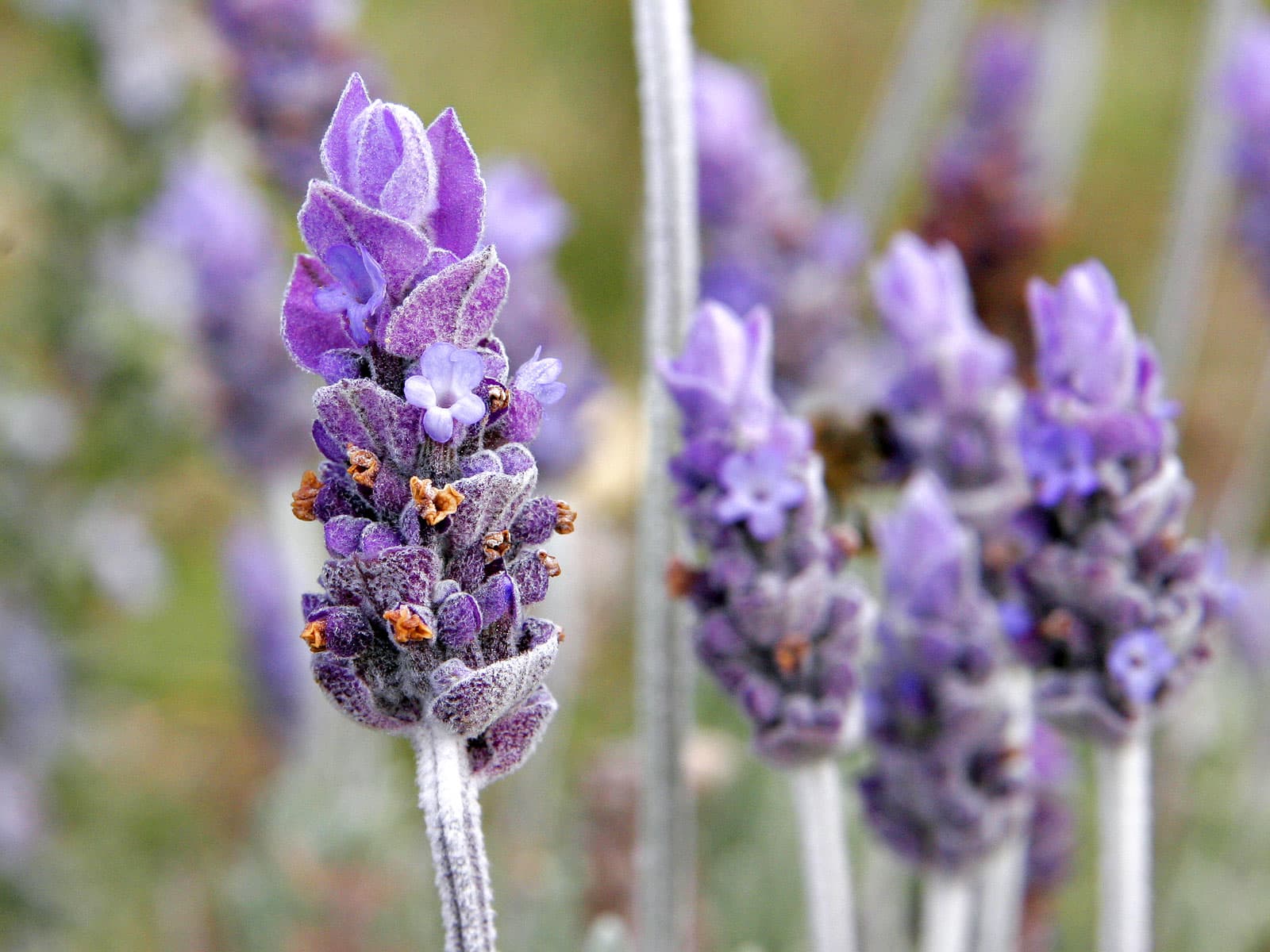
Lavender Angustifolia Oil is a steam-distilled botanical oil obtained from the flowering tops of Lavandula angustifolia and defined by a complex native volatile ensemble responsible for its characteristic floral aroma and documented calming, antibacterial, and anti-inflammatory activity.
Active Compound Profile
The functional identity of Lavender Angustifolia Oil is established by its full-spectrum retention of monoterpene alcohols, esters, and minor sesquiterpene fractions native to the intact Lavandula angustifolia inflorescence. Unlike isolated linalool or reconstituted synthetic floral bases, the oil preserves the coordinated chemical ensemble of the parent plant, in which linalyl acetate and linalool operate as primary aromatic and bioactive markers while trace phenolics and ocimene derivatives contribute to the secondary functional matrix. This native breadth underpins the distinctive floral note and the soothing physiological response observed in finished formulations. The ester-rich aromatic fraction supplies the recognizable sweet herbal scent, while the alcohol-dominated bioactive fraction is associated with the calming and antimicrobial properties leveraged across multiple industrial sectors.
For aromatherapy and pharmaceutical producers, the coordinated volatile ensemble is the primary procurement driver because it delivers validated olfactory and mucosal calming effects without off-note drift. Cosmetics and personal care formulators utilize the same fraction for fragrance fixation and skin-conditioning claims, whereas herbal medicine manufacturers prioritize the antibacterial and anti-inflammatory attributes for topical and inhalable preparations. Retention of the complete native profile distinguishes the material from diluted or adulterated lavender absolutes, which sacrifice volatile top notes and secondary metabolites during solvent recovery or cut-rate blending.
Extraction Methodology
The production of Lavender Angustifolia Oil is oriented toward maximal recovery of the plant's soluble aromatic load through conventional steam distillation of harvested flowering tops. The objective is a concentrated essential oil fraction in which water and inert plant residue are fully separated from the condensed volatile phase. By preserving all native compounds through the distillation condensate, the oil maintains the full ensemble required for both sensory and functional performance. This approach avoids the use of chemical solvents that would otherwise introduce carrier residues or strip heat-labile esters from the finished material.
Post-distillation, the crude condensate is phase-separated to isolate the hydrophobic oil layer, which is then stabilized against oxidation through controlled storage away from light and elevated temperature. The absence of dilution steps confirms that the commercial material is a pure essential oil rather than a reconstituted fragrance emulsion, a distinction that is critical for regulatory classification in pharmaceutical and cosmetic supply chains.
Specification and Quality Parameters
Commercial Lavender Angustifolia Oil is specified against identity and purity criteria that confirm botanical origin and native composition. Key parameters include refractive index range, optical rotation, and ester value correlated to linalyl acetate content, which together verify that the oil has not been rectified or extended with lavandin derivatives. Microbiological limits and absence of synthetic adulterants are enforced for pharmaceutical and personal care grade lots.
The following table summarizes representative specification bands applied to pure Lavandula angustifolia oil at industrial supply grade:
| Parameter | Typical Range | Analytical Basis |
|---|---|---|
| Linalyl acetate | 25% – 45% | GC-MS quantitation |
| Linalool | 20% – 35% | GC-MS quantitation |
| Refractive index (20°C) | 1.456 – 1.464 | Abbe refractometry |
| Optical rotation | -3° to -10° | Polarimetry |
| Acid value | ≤ 1.0 mg KOH/g | Titrimetry |
These bands are indicative of unextended oil from high-altitude Lavandula angustifolia crops and are used by formulators to distinguish true angustifolia oil from hybrid lavandin or synthetic blends claiming the same label.
Lavender Angustifolia Oil bridges aromatherapy and clinical formulation through quantified antibacterial and anti-inflammatory actives
Industrial Application Mapping
The cross-sector utility of Lavender Angustifolia Oil is defined by the overlap of its aromatic and bioactive properties across four principal industries:
- Aromatherapy: Employed as a standalone inhalable or diffuser concentrate where the native ester-alcohol ensemble produces documented calming olfactory stimulation without synthetic fixatives.
- Cosmetics: Incorporated at low dosage into creams, serums, and masks to provide floral fragrance and skin-conditioning benefit supported by the oil's anti-inflammatory fraction.
- Personal Care: Used in shampoos, bath preparations, and deodorant formats where the antibacterial attributes supplement preservation systems and the aroma masks base emulsifier odor.
- Pharmaceuticals: Applied in topical herbal preparations and mucosal inhalants where the calming and antibacterial profile aligns with monograph requirements for Lavandula-derived actives.
Each application relies on the unadulterated native oil profile; fractionation or dilution reduces the compound synergy that justifies the ingredient's position in finished product claims. Full material specification and procurement detail are available on the Lavender Angustifolia Oil product page.
Formulation and Stability Considerations
When integrating Lavender Angustifolia Oil into industrial bases, formulators must account for the volatility of linalyl acetate and the oxidative sensitivity of linalool under prolonged heat exposure. Incorporation below 45°C in emulsion phases preserves the top-note integrity, while antioxidant co-loading with tocopherol extends shelf stability in leave-on personal care items. In pharmaceutical topical vehicles, compatibility with non-ionic emulsifiers should be verified to prevent ester hydrolysis that would shift the sensory and active profile.
Dosage banding is typically governed by end-use category: aromatherapy concentrates require undiluted or minimally carrier-diluted oil, cosmetics operate within 0.1% – 1.0% weight-for-weight inclusion, and personal care rinse-off systems tolerate up to 2.0% where fragrance intensity and antimicrobial辅助 are required. Pharmaceutical preparations follow jurisdictional monograph limits that reference the same native compound thresholds described in the specification section.
Regulatory and Supply Chain Positioning
As a categorized oil derived from a recognized botanical, Lavender Angustifolia Oil occupies a defined position in cosmetic ingredient inventories and herbal medicinal supply frameworks. Its status as a pure essential oil rather than a solvent extract simplifies allergen labeling relative to absolutes, though limonene and linalool declaration remains mandatory above threshold concentrations in cosmetic regulation. Supply chain verification through batch-specific GC-MS fingerprinting ensures that formulators receive material consistent with the angustifolia species rather than lavandin hybrids, protecting finished-product claims across all four target industries.
Procurement contracts for manufacturing scale should specify distillation season, geographical origin, and the analytical bands listed above to prevent substitution. The technical dossier maintained by Essential Taste supports audit readiness and aligns with GMP expectations for pharmaceutical and cosmetic raw material control.
Frequently Asked Questions
What are the primary active compounds in Lavender Angustifolia Oil?
Lavender angustifolia oil contains aromatic compounds responsible for its floral scent, alongside constituents imparting antibacterial and anti-inflammatory properties.
Which industries utilize Lavender Angustifolia Oil in formulation?
The oil is applied across aromatherapy, cosmetics, personal care, and pharmaceutical sectors due to its calming, antibacterial, and anti-inflammatory attributes.
What extraction method yields Lavender Angustifolia Oil?
The product is a pure essential oil obtained from Lavandula angustifolia; standard industry recovery is via steam distillation of the plant material.
Why is specification control critical for this extract?
Defined active profiles and purity ensure reproducible functionality in calming, antibacterial, and anti-inflammatory applications across regulated B2B formulations.