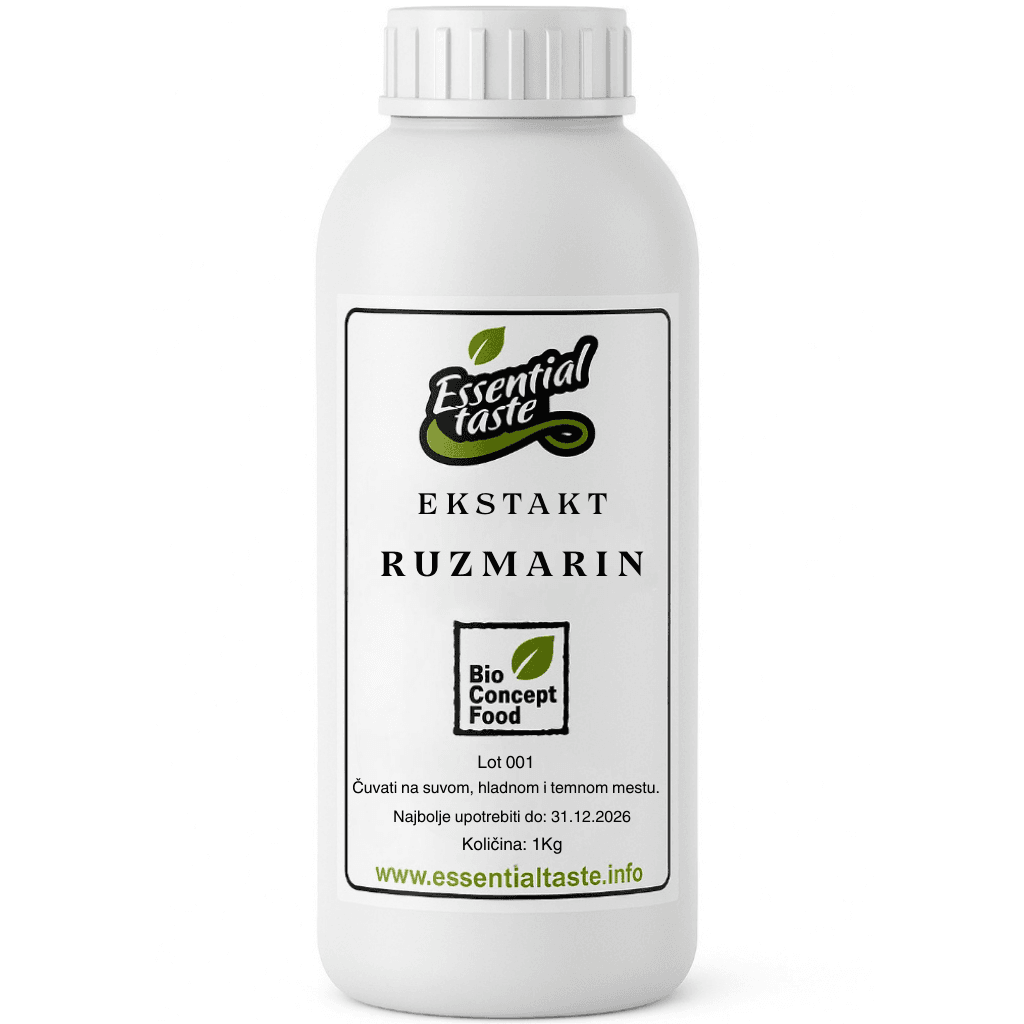
Rosemary extract is a botanical-derived ingredient standardized to a minimum of 65% dry matter and characterized by a concentrated matrix of natural aromatic and bioactive compounds with demonstrated antioxidant activity.
Active Compound Profile
The functional identity of rosemary extract is defined by its natural aromatic and bioactive compound content retained at a minimum 65% dry matter concentration. These constituents operate as a coordinated chemical ensemble rather than isolated molecules, contributing both sensory and physiological performance in industrial formulations. The bioactive fraction is responsible for the ingredient's antioxidant effects, which protect lipids, proteins, and pigments from oxidative degradation, while the aromatic fraction supplies the characteristic herbal note utilized in flavor systems for foods and beverages.
For manufacturers in the meat preservation sector, the antioxidant bioactives are the primary procurement drivers because they inhibit rancidity in cured and processed meats without synthetic additives. Cosmetic and pharmaceutical formulators prioritize the same antioxidant activity for rejuvenating effects on skin and formulation stability, whereas food and beverage producers balance both aromatic enhancement and oxidative protection. The retention of the full native chemical breadth at the specified dry matter floor distinguishes the material from reconstituted aromatic chemicals, which lack the synergistic secondary metabolites present in the extracted profile.
Specification Parameters
From a specification standpoint, the defining quantitative parameter is the minimum 65% dry matter content, which confirms the concentration of soluble aromatic and bioactive material relative to moisture and inert carriers. This threshold ensures batch-to-batch consistency for formulators requiring predictable antioxidant dosing and flavor impact. The extract is supplied as a versatile industrial-grade preparation suitable for deployment across food, beverage, meat, cosmetic, and pharmaceutical manufacturing streams.
Storage specification requires a cool, dark environment to prevent degradation of heat- and light-sensitive aromatic molecules and to maintain antioxidant potency over the product's shelf life. Deviation from these conditions accelerates loss of volatile compounds and reduces the effective bioactive load. Procurement and quality teams should verify dry matter percentage and organoleptic profile on incoming lots to confirm compliance with the published minimum before line integration.
Extraction Methodology
Rosemary extract is produced through extraction processes that concentrate the aromatic and bioactive fractions from the rosemary plant material into a stable preparation meeting the minimum 65% dry matter standard. The objective of the extraction step is to capture the full complexity of the botanical's chemical profile without degradation of sensitive constituents. Careful process control preserves the volatile compounds responsible for sensory performance and the polar constituents associated with antioxidant functionality.
Unlike synthetic compounding, which assembles individual molecules in a reactor, extraction yields a material whose constituent ratios reflect the source botanical. This native proportionality is critical for the synergistic antioxidant behavior observed in meat preservation and cosmetic applications, where isolated molecules underperform relative to the complete extract. The resulting ingredient is engineered for direct incorporation into formulations requiring both preservation and sensory contribution.
A minimum 65% dry matter rosemary extract delivers verified antioxidant performance across food, meat, cosmetic and pharma formulations
Industrial Application Spectrum
- Food & Beverages: enhancement of flavor systems through the aromatic fraction and protection of finished products from oxidative off-notes via antioxidant activity.
- Meat Preservation: direct intervention against lipid oxidation in oils and meat products, extending shelf stability without synthetic preservatives.
- Cosmetics: deployment for rejuvenating effects supported by antioxidant defense of formulation and skin-contact matrices.
- Pharmaceuticals: utilization of the antioxidant and bioactive profile as a stable raw material in topical and internal preparations requiring botanical actives.
Each of these deployment contexts relies on the same underlying specification — minimum 65% dry matter with retained aromatic and bioactive compounds — but selects the extract on the basis of sector-specific performance priorities. Cross-industry utility is a direct consequence of the extract's dual-mode activity as both sensory modifier and functionally active raw material. Detailed sourcing and batch data are available on the product page.
Formulation Integration Considerations
When incorporating rosemary extract into food and beverage systems, formulators should account for the herbal aromatic intensity contributed by the volatile fraction and titrate usage to avoid masking primary flavor profiles. In meat preservation, the antioxidant dose is typically aligned to the lipid content of the product, with the 65% dry matter baseline used to calculate active equivalence per kilogram of finished good. Cosmetic and pharmaceutical manufacturers must evaluate compatibility with emulsion and solvent phases to maintain the stability of rejuvenating bioactives during prolonged storage.
Because the ingredient is specified for cool, dark storage, downstream warehouses and process intermediates should mirror these conditions prior to final incorporation. Exposure to elevated temperature or ambient light during blending reduces the effective aromatic and bioactive load, negating the technical advantage of the native extract over synthetic alternatives. Documentation of storage compliance should accompany each lot through the supply chain.
Comparative Material Positioning
Rosemary extract occupies a distinct position relative to single-molecule antioxidants and reconstituted flavor chemicals. The minimum 65% dry matter specification confirms concentration of the full botanical matrix, whereas synthetic agents deliver only target molecules absent secondary metabolites. For meat preservation and oil stabilization, this distinction translates to broader spectrum oxidative protection; for cosmetic and pharmaceutical use, it supports multifunctional formulations where rejuvenating and aromatic roles are satisfied by one raw material.
From a procurement perspective, the extract's cross-sector approval — food, beverage, meat, cosmetic, pharmaceutical — reduces SKU complexity for contract manufacturers serving multiple industries. The unified specification simplifies qualification and audit processes, as a single material certificate covers aromatic, antioxidant, and dry matter criteria across all applicable regulatory frameworks.
Frequently Asked Questions
What are the active compounds specified in rosemary extract?
Rosemary extract is specified as rich in natural aromatic and bioactive compounds with a minimum of 65% dry matter content.
What are the documented industry uses of rosemary extract?
It is used in food and beverages for flavor, in meat and oil preservation, and in cosmetics and pharmaceuticals for antioxidant and rejuvenating effects.
What are the storage requirements for rosemary extract?
Rosemary extract must be stored in a cool, dark place to maintain stability of its aromatic and bioactive compounds.
What is the minimum dry matter specification for this extract?
The full description specifies a minimum of 65% dry matter for the natural aromatic and bioactive compounds present in the extract.