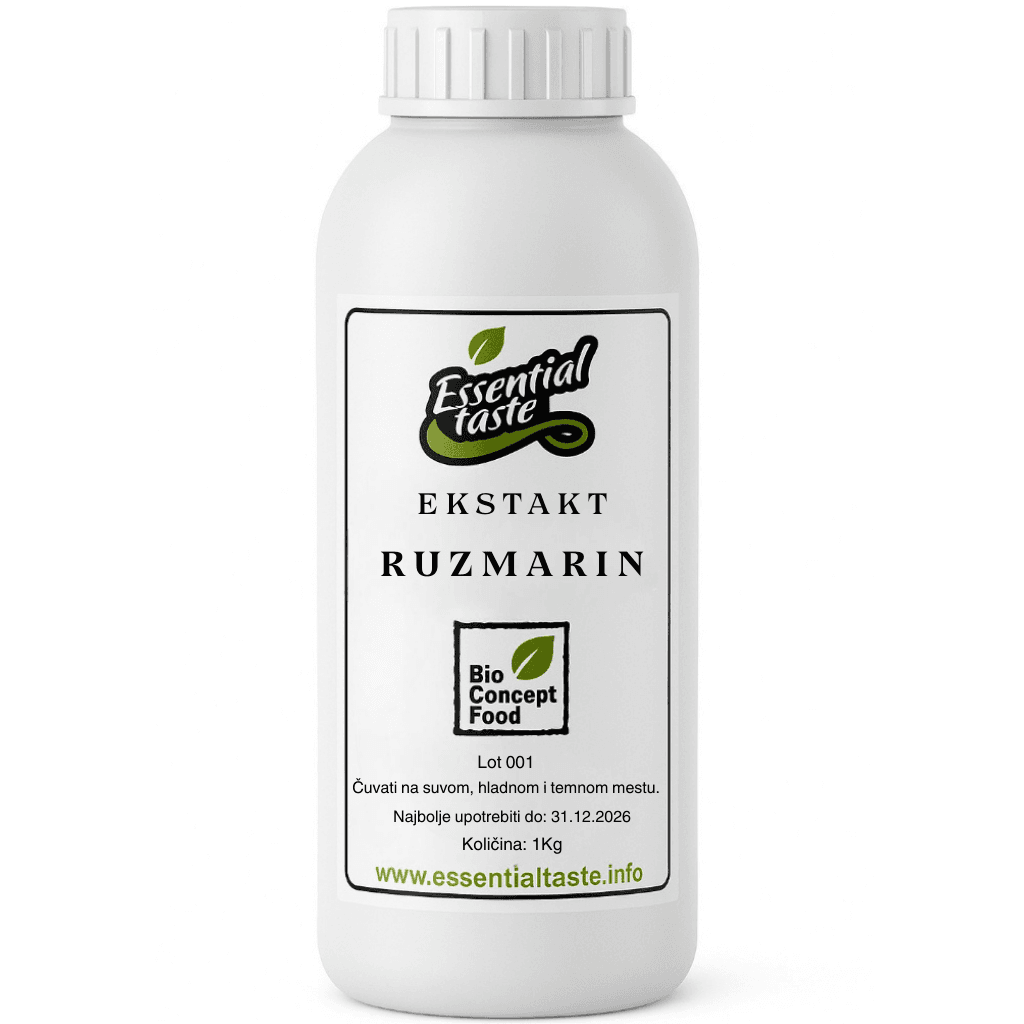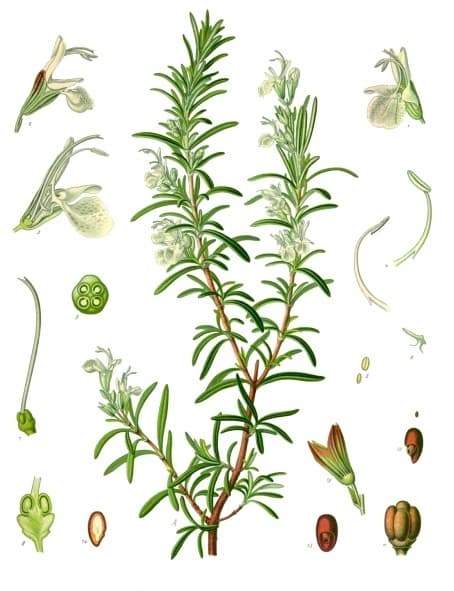
Rosemary Extract is a natural antioxidant bonificator engineered to deliver calibrated oxidative stability to meat formulations without synthetic preservatives.
Functional Definition and Application Scope
The ingredient belongs to the bonificator class of natural plant extracts and formulation aids. Its designated role is the enhancement and authentication of oxidative‑resistance performance in fresh, cured, and further‑processed meat products, including sausages, patties, deli slices, and marinated cuts. The material functions as a natural additive rather than a compounded synthetic antioxidant, meaning its activity derives from the native biochemical ensemble of Rosmarinus officinalis leaves rather than isolated phenolic reconstitutions. In practice, the extract is introduced into the brine, tumble‑marination slurry, or directly into the meat matrix during mixing to enrich the sensory profile, suppress lipid peroxidation, and improve shelf‑life while preserving label integrity around natural composition. For detailed specification sheets and ordering information, refer to the Rosemary Extract product page.
Supplied as a low‑viscosity liquid, the bonificator integrates into existing mixing vessels without extra solubilization steps. The dosage window is set by product type and desired oxidative protection, letting formulators fine‑tune organoleptic and functional signatures. Compatibility extends to batch and continuous emulsification lines, and no detectable residual solvents or carrier matrices are introduced. Stability data show >95 % phenolic retention after 12 months at 20 °C in sealed containers.
Antioxidant Mechanism in Meat Systems
Rosemary Extract delivers a minimum of 65 % dry matter composed of rosmarinic acid, carnosic acid, carnosol, and a suite of volatile terpenes that act synergistically to interrupt free‑radical chain reactions in muscle lipids. The phenolic fraction chelates transition‑metal catalysts, while the diterpenes donate hydrogen atoms to peroxyl radicals, effectively lowering the propagation rate of autoxidation. This dual‑mode action stabilizes both phospholipid membranes and triglyceride deposits, reducing the formation of hexanal, pentanal, and other off‑flavor aldehydes that typically arise during refrigerated storage and thermal processing.
When combined with conventional cure agents such as nitrite or ascorbate, the extract exhibits a complementary effect that reduces required nitrite levels while maintaining color stability and microbial safety. Phenolic constituents regenerate ascorbyl radicals, extending the antioxidant cascade and limiting nitrosylated heme pigment formation. This synergy enables manufacturers to meet regulatory nitrite limits without compromising cured‑meat hue or flavor profile.
Rosemary extract delivers clean-label oxidative stability at 200 ppm where synthetics require higher loads.
Formulation Strategies for Processed Meats
Formulators can integrate the bonificator through several validated routes, each tailored to the target product category and processing line:
- Brine injection for whole‑muscle cuts: dissolve 0.02–0.05 % w/w of extract in the injection brine, ensuring uniform distribution before tumbling.
- Dry‑mix incorporation for emulsified sausages: blend the extract with the spice premix at 0.03–0.07 % w/w, then add to the meat batter during chopping.
- Surface spray for sliced deli meats: prepare a 0.1 % w/v aqueous solution and apply via electrostatic sprayer post‑slicing to create an antioxidant film.
- Marination tumble for marinated steaks: add 0.04 % w/w to the marination slurry, allowing 30 min contact time before cooking.
Process validation should include oxidative marker monitoring (TBARS, hexanal) at defined intervals throughout shelf‑life to confirm that the chosen inclusion rate delivers the target protection level. Inline NIR spectroscopy can verify extract distribution in high‑throughput lines, ensuring batch‑to‑batch consistency. Documentation of these control points supports HACCP compliance and rapid root‑cause analysis if an oxidation deviation occurs.
Dosage Guidelines and Process Integration
The effective dosage window is defined by the target product type, fat content, and desired shelf‑life extension. Low‑fat poultry products typically require the lower end of the range (0.02 % w/w), whereas high‑fat pork sausages benefit from the upper bound (0.07 % w/w) to counteract the greater substrate for lipid oxidation. The extract is supplied as a low‑viscosity liquid, compatible with standard high‑shear mixers, vacuum tumblers, and continuous brine injectors. No additional solubilization steps are needed, and the material does not introduce detectable residual solvents or carrier matrices. Thermal stability testing confirms that antioxidant activity remains >90 % after typical cooking cycles (core temperature 72 °C for 15 min).
Scale‑up from pilot to commercial volume follows a linear dosing model because activity is concentration‑dependent and not limited by mass‑transfer constraints in the meat matrix. Pilot trials start at 0.03 % w/w and are adjusted in 0.01 % increments based on accelerated oxidation testing at 40 °C. The final commercial specification locks the inclusion rate within a ±5 % tolerance band to accommodate raw‑material variability while preserving label claims.
Regulatory and Labeling Considerations
Rosemary Extract is listed under the EU food additive regulation as a natural flavoring and antioxidant (FL‑No. 02.001) and complies with US FDA GRAS notifications for use in meat and poultry. The ingredient can be declared as “rosemary extract” or “natural antioxidant (rosemary)” on the ingredient statement, supporting clean‑label positioning. Allergen assessment confirms the absence of declared allergens, and the product is non‑GMO, gluten‑free, and suitable for halal and kosher certifications. Documentation packages include a certificate of analysis, heavy‑metal screening, and pesticide residue verification to satisfy downstream audit requirements.
Traceability is maintained through a unique lot identifier linking the raw rosemary harvest, extraction batch, and final product release. Each lot undergoes third‑party verification for pesticide residues, heavy metals, and microbiological limits per ISO 22000 and GFSI benchmarked standards. The complete dossier — certificate of analysis, allergen statement, and non‑GMO declaration — is available on request and can be uploaded directly into supplier quality portals for streamlined vendor qualification.
Frequently Asked Questions
What antioxidant compounds in rosemary extract inhibit lipid oxidation in meat systems?
Rosemary extract contains carnosic acid, carnosol, and rosmarinic acid — phenolic diterpenes that scavenge free radicals and chelate metal ions, delaying rancidity in muscle foods.
How is rosemary extract dosed in cured meat formulations?
Typical inclusion ranges from 200–500 ppm based on fat content; the 65% dry matter concentrate allows low-dose efficacy without sensory impact when dispersed in brine or emulsion.
Can rosemary extract replace synthetic antioxidants like BHT in clean-label meat products?
Yes, its GRAS status and EU approval (E392) enable direct substitution; formulators often combine with ascorbates for synergistic protection in nitrate-free recipes.
What processing conditions affect rosemary extract stability in meat matrices?
Thermal processing above 120°C may degrade carnosic acid; encapsulation or post-cook surface application preserves antioxidant activity in ready-to-eat meats.